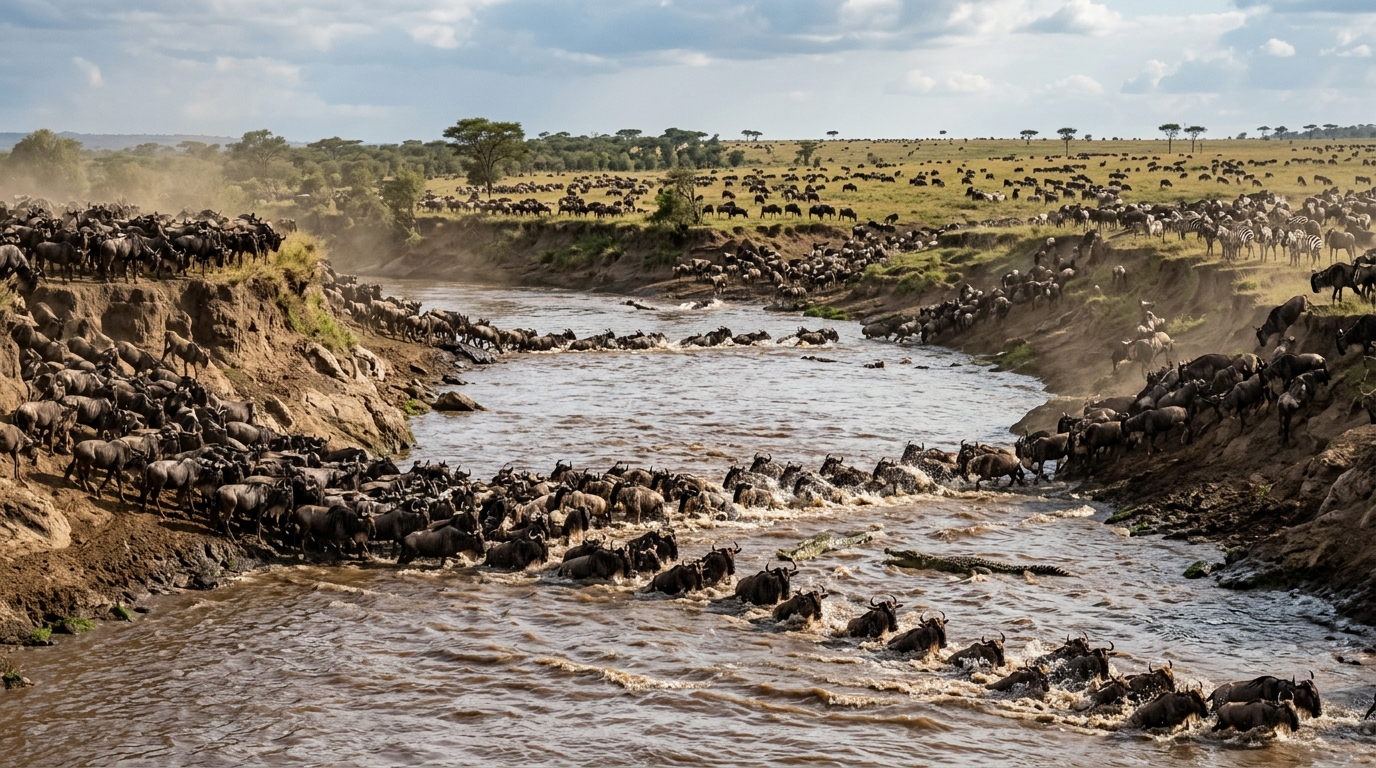
AI-drafted safari itineraries fail in six predictable places: they plan against calendars while the migration moves on rain; they recommend closed or invented places; they can't hold scarce permits like Rwanda's 96-a-day gorilla slots; they treat bush flights like scheduled airlines; they never check camp child policies; and when something breaks, nobody owns the outcome. Use AI for the draft — then have an accountable human audit it before you book.
The safari itineraries reaching our desk these days are often gorgeous. Day-by-day structure, evocative camp descriptions, a confident rhythm of game drives and sundowners. More and more of them arrive drafted by AI, and honestly — as drafts, they're good. We tell people to start exactly this way.
The audit is where it gets interesting: the draft against the real machine — flight schedules, camp policies, park rules, rain. In 2024, researchers built the flagship academic benchmark for AI travel planning — 1,225 curated planning tasks with hard constraints. GPT-4 produced a viable plan 0.6 percent of the time. The authors' diagnosis: language agents “struggle to stay on task… or keep track of multiple constraints.” Models have improved since. The constraints haven't moved an inch.
En Route Truth: AI itineraries don’t fail at writing. They fail at the six places where a safari stops being information and becomes physical.
1. It plans against a calendar. The migration runs on rain.
Nearly every AI safari draft anchors on a date: “late July — peak river-crossing season.” Asilia, one of East Africa's most respected operators, states it plainly: the migration's rhythm is “dictated entirely by the rains,” seasons run early or late, and crossings “can never be guaranteed.” Peer-reviewed research agrees — wildebeest movement is genuinely unpredictable, responding to environmental cues at multiple scales. It's not that the AI is missing data. There is no data that resolves rain into a bookable date. Humans solve this structurally: mobile camps that physically relocate with the herds, and plans built with slack where the uncertainty lives.
2. It recommends places that are closed, wrong, or don’t exist
The documented cases are piling up: a trail recommended long after it had closed for rehabilitation; a hotel “only five miles” from dinner reservations with no way to actually cover the distance — the AI had calculated distance and ignored how a human crosses it; and, most memorably, tourists in Peru sent toward the “Sacred Canyon of Humantay” — a destination that does not exist, invented by blending two real places, nearly reached at 4,000 meters of altitude without oxygen or phone signal. On safari the stakes of an invented detail are higher, because there's no taxi, no signal, and no walking out.
3. It can’t hold inventory — and safari is an inventory game
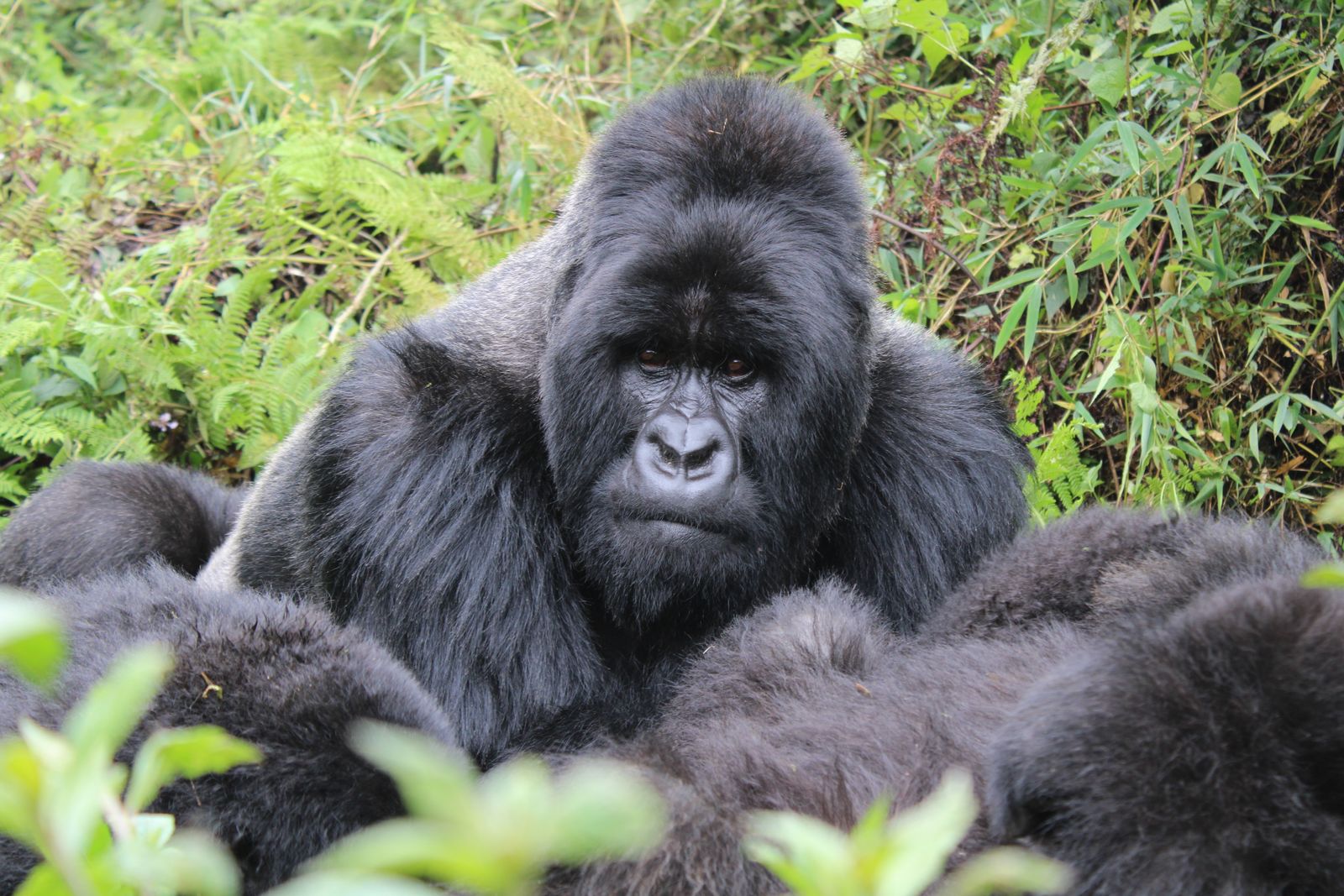
Gorilla trekking in Rwanda costs $1,500 per person, and exactly 96 permits exist per day — held and allocated through the development board and a handful of operators. The best camps in the Sabi Sands sell out more than a year ahead. An AI can describe a permit beautifully. It cannot hold one. By the time a July draft becomes a July booking, the scarce pieces the whole trip was designed around are often gone — and the itinerary doesn't know it.
4. It ignores the physics: 15 kilos, and flights confirmed the night before
Bush flights allow 15 kilograms per person, soft bags only, hand luggage included — the workaround for a photographer's kit is buying an extra seat at adult fare. And those flights run like flying shuttles: routings shift at short notice, and the camp manager confirms your actual departure time the night before. AI drafts consistently treat bush flights like scheduled airlines with checked-baggage allowances. That single assumption quietly breaks connections across the whole plan.
5. It never asks whether the camp will take your kids
Child policies run from all-ages to sixteen-plus, camp by camp, across the Greater Kruger, the Sabi Sands, and East Africa — at Singita's Sabora in the western Serengeti, children under ten can't stay and under sixteen can't walk. Many camps will take a younger family only if you book a private vehicle. This is exactly the kind of unglamorous, camp-level fact that lives in reservation-office policy documents and guides' heads — not in the training data. It's the first thing we check for a family.
6. Nobody owns the outcome
Read the fine print of a leading AI trip planner and the posture is explicit: not responsible for bookings, no warranty of accuracy, total liability capped at one hundred dollars. When an airline's own chatbot misled a passenger, the company argued in tribunal that the bot was “a separate legal entity that is responsible for its own actions.” The tribunal called that “a remarkable submission” — and made the airline pay. This is the structural difference, and it has nothing to do with how smart the model is: when something breaks at 6 a.m. in the Mara, someone either owns that problem or doesn't.
The honest conclusion
None of this means don't use AI. Use it the way we do: as the fastest first draft in the history of travel planning. The market has already figured out the right division of labor — in a Global Rescue survey last fall, 93 percent of travelers said they'd use AI to plan their next trip, and 79 percent said they weren't comfortable letting it book or manage a trip without a human approving. Plan with the machine. Deliver with a human whose name rides on the outcome.
That's what our audit desk is for. Send us the draft — the whole conversation, messy formatting and all. Within 48 hours you'll have a written markup of exactly where it breaks and what to fix, checked against the seasons, the policies, and the physics. Complimentary through our founding season. The markup is yours either way.
Fair Questions
Should you use AI to plan a safari?
Yes — for the draft. AI is the fastest first pass in the history of travel planning. Then have someone accountable check it against the things AI can't hold: the rain-driven migration, permit inventory, bush-flight rules, and camp-level child policies.
What does a Second Opinion on an AI itinerary include?
A written markup within 48 hours — what works, what breaks, what's overpriced, what's missing — checked against real seasons, real camps, and trips we run, plus a 30-minute call. Complimentary through our founding season.